
This article is deeply personal and is about a journey I have embarked on around story and principle. If you have read previous articles, you may have picked up on a theme.
The Purpose of Story
Let me preface this by saying when I say the word "story," I mean the larger context of ideas like storytelling, narrative, personal story, lore, folktale, myth, legend, parable, fable, propaganda, and yes, even history. All of these have perspective, motive, and voice; and even when true, they do not speak to the objective truth, since that would require a level of observation beyond human capacity. So we must distill our observed experience to words, sounds, and pictures. We do this so we can get across ideas that would take a millennium to share and can be condensed into a digestible form.
Stories engage the human mind and are an effective way to send a signal of human knowledge and wisdom through time.

These encoded signals can be used to share simple to complex ideas, and they can also be used to achieve outcomes. We have developed systems like writing and recording to strengthen these signals into a repeatable form that can be shared at a massive scale.
Story is a powerful yet challenging method of sending a signal since it can be distorted, and each iteration of the same story can degrade and/or morph as it passes through the filter of time, space, and each person receiving it.
The intent of the storyteller greatly impacts the integrity of the signal.
What I Distrusted About Story

In simple terms, it was distortion.
Story is a powerful communication tool, but it can be exaggerated, romanticized, institutionalized, and distorted until people stop asking whether it is true.
I have seen how easily people can become attached to a style, a teacher, a lineage, a religion, or a story without ever discovering the principle beneath it.
"I have seen stories used to manipulate and deceive."
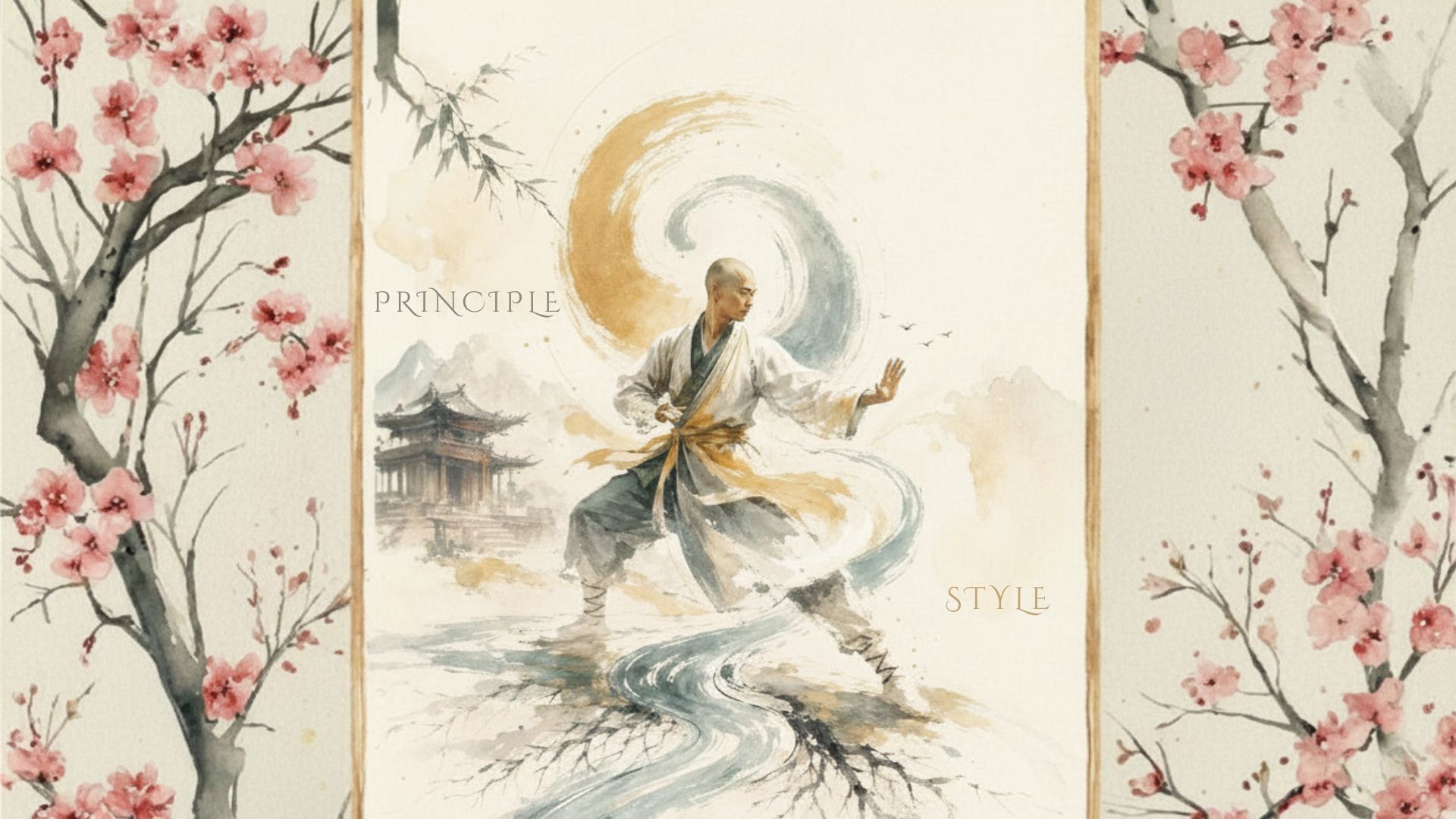
Stories are different from principles; they carry the weight of an ocean and stream in and out of people and cultures. Stories move, change, flow, and can make things sink and float. Principles, on the other hand, hold everything together and make reality possible.
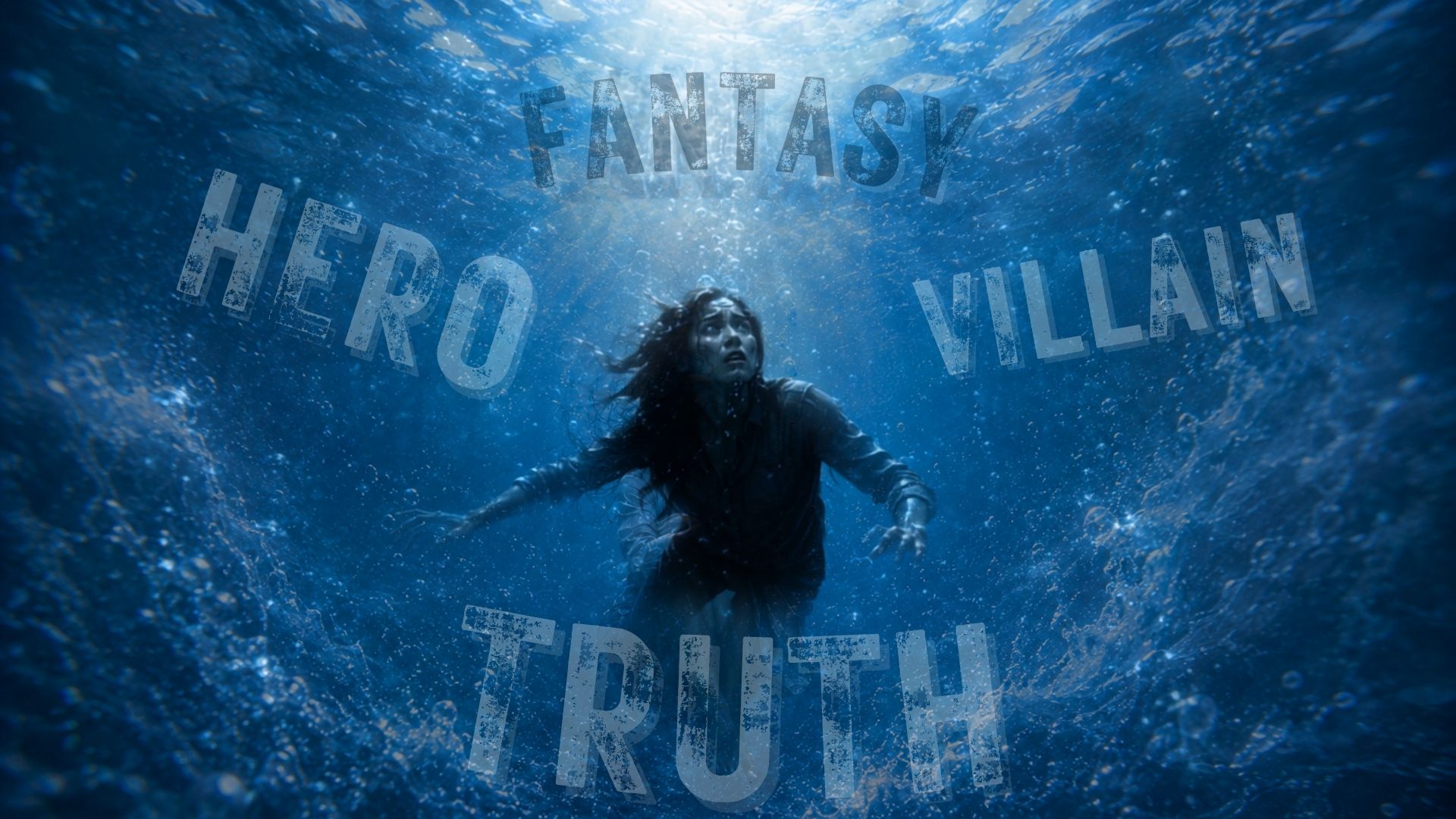
Like the ocean, stories are creative, and that creativity takes on a life of its own and, in turn, influences reality and, in some cases, can determine life and death.
Stories can create heroes 😇 and villains 👿 who are no longer allowed to be human. They can turn teachers into unquestionable authorities. They can make people loyal to an image while separating them from their own experience.
- A detail is emphasized.
- Another is removed.
- A human being becomes a symbol or an object.
- A difficult life becomes a clean heroic journey.
- A complicated tradition becomes a simple legend.
This is a great power, but it is also a great danger. What can be even more dangerous than the internal stories we tell ourselves that block us from our gifts and rob us of our potential? I began to see story as unreliable because it could be manipulated. I trusted principle because it seemed harder to corrupt.
But my conclusion was incomplete.
A story does not have to be true to speak truth.
Because I could see these dangers, I began to place more and more value on principle.
For a time, I nearly threw the story away altogether to focus on the principles. That would have been a mistake.
I was about to throw out the baby with the bath water.
What I Trust About Principle
Though I have respect for systems & concepts that rely heavily on story and abstraction, the constant incongruence and distortion of the signal I found in them disillusioned me over time.
Principle felt safe to me because principle does not care about my feelings or anyone else's. It exists and provides consistent results, not requiring belief. Belief is a powerful tool and a topic for another day.
However...
- Gravity does not care who explains it.
- Balance does not change according to the reputation of the teacher.
- Alignment does not become less important because the person describing it is unpopular.
- Cause and effect do not need a compelling biography.
- Principles can be tested against reality.
That matters to me.
In martial arts, a beautiful story cannot make a structurally weak technique function. Whether or not Bodhidharma was real does not change a punch, kick, or how meditation interacts with your mind.
- A famous lineage cannot transfer force through a disconnected body.
- A sacred explanation cannot correct poor timing.
- The practitioner must eventually meet the truth of the experience.
- The movement either connects or it does not.
- The position either provides stability or it does not.
- The method either survives pressure or it falls apart.
- This is one of the reasons I became so committed to principle.
- Principle removes some of the room for performance.
It asks us to look again.
It asks us to test what we have been told.
It asks us to take responsibility for what we claim to understand.
Principles are also distilled concepts, but they are of universal nature; they are not dependent on human perspective. They cannot be modified or mutated, as they are immutable.
In my practice, when I discovered the principles for myself, my practice became deeply principle-based.
I began to entertain a more scientific approach because I want to know what remains true when the names, customs, personalities, and explanations are removed.
I want to know what can be observed.
- What can be tested?
- What can be repeated?
- What continues to function regardless of who believes in it?
This way of thinking has guided much of my life.
It shapes how I practice martial arts, how I teach, how I build systems, how I approach spiritual study, and how I evaluate the things passed down through tradition.
Too Much Truth

There is another problem: principles can reveal truth that people may not be ready for if they have built a worldview around a story. I know this personally as I have had many of my stories busted as I continue to seek, including my story about story.
The truth is:
- People do not always remain present simply because we give them something true.
- Sometimes truth is too direct.
- Sometimes it reveals too much at once.
- Sometimes it removes a comforting explanation before the person has developed the strength to stand without it.
- Principles can unravel deeply held beliefs.
Truth seekers get the truth teachers - Keagan Midas
I have witnessed martial arts schools empty when actual martial arts are being taught and fill up again when the focus is confidence and a good story.
One thing is clear: the capacity of the listener is key, whether you are sharing a principle or a story.
Sometimes it gives someone the entire mountain when they only have the capacity to take the next step.
Even people inspired by a teaching can give up when confronted with what the principle actually requires to embrace it.
Principle can be demanding.
- It does not flatter us.
- It exposes inconsistency.
- It reveals where our preferences conflict with reality.
- It shows us where our identity has become attached to a method, belief, or excuse.
That kind of truth can be liberating.
It can also be overwhelming.
I have had to examine my own teaching because of this.
Was I giving people truth without giving them a way to stay in relationship with it?
Was I illuminating the path so brightly that some people could no longer see the next step?
Was I assuming that clarity alone was enough for transmission?
The truth may be accurate and still arrive before someone is ready to receive it.
That does not mean we should lie.

- It means that teaching requires more than being correct.
- It requires timing.
- It requires relationship.
- It requires sensitivity to what the student can presently hold.
This is where story can help.
🔐The Yin and Yang Connection